


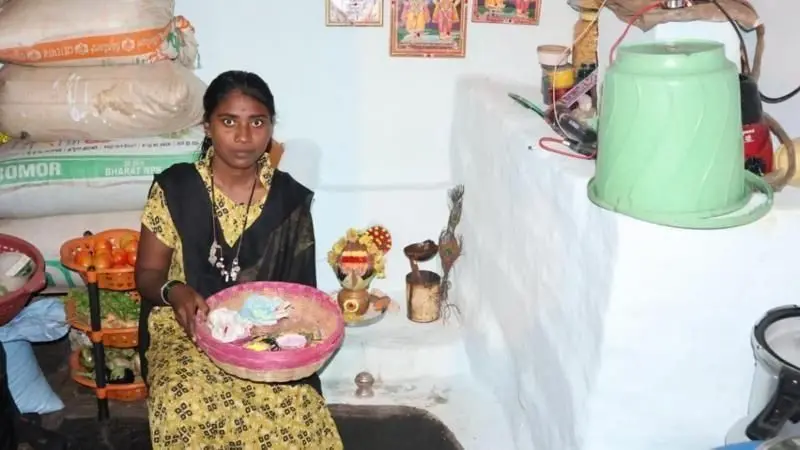
Who Are the Devadasis?
The term Devadasi means “servant of the deity.”
Historically, Devadasis were respected temple dancers and cultural performers. Over centuries, the practice shifted into a harmful tradition where girls are dedicated to a temple deity and later pushed into forced sex work, poverty, and social discrimination.
“Married to a God, Forced Into Sex Work” – Chandrika’s Story
Chandrika (name changed) was just 15 when she underwent a ritual in which she was symbolically married to a temple deity. She did not understand what it meant.
Years later, she found herself trapped in the sex industry, a life she never chose.
-
At 19, a relative took her to a city on the pretext of giving her work.
-
She was instead abandoned in a red-light area.
-
With no education, no language skills, and nowhere to go, she was forced to accept sex work for survival.
Now in her early thirties, Chandrika is battling severe health problems and emotional trauma caused by years of exploitation.
Government Survey on Devadasis in Karnataka
The state government is currently surveying women who were forced into sex work after being dedicated as Devadasis.
Though Karnataka officially banned the practice in 1982, secret temple dedications continue in rural regions.
Activists say:
-
Girls are still dedicated during nocturnal rituals.
-
Many cases come to light only after a girl becomes pregnant.
Not Every Devadasi Enters Sex Work — But All Face Social Stigma
Two young women, Ankita and Shilpa, offer contrasting examples.
Ankita: Forced Ritual, But Refuses Sex Work
At 23, Ankita works as a farm labourer earning around ₹350 a day.
She was forced into the ritual by her parents after her brother’s death.
She avoids relationships because Devadasis are expected not to marry.
Shilpa: Abandoned During Pregnancy
Shilpa entered a relationship with a migrant labourer.
When she became pregnant, he disappeared without a trace.
Now she is raising her child alone, battling poverty and social shame.
Both women want to escape the Devadasi label but lack economic support.
Why the Devadasi System Still Exists
Despite strict laws, the practice continues due to:
1. Extreme Poverty
Families in financially unstable regions dedicate girls hoping for divine blessings or temple support.
2. Caste-Based Exploitation
Most Devadasis belong to marginalized castes, making them vulnerable.
3. Superstitious Beliefs
Rural communities still believe dedicating a daughter will bring good fortune.
4. Lack of Education
Girls with no schooling are more easily pushed into harmful traditions.
5. Illegal Sex Trade
Traffickers exploit Devadasis, knowing they are vulnerable and lack legal protection.
The Harsh Reality Behind the Devadasi Tradition
Dr. M. Bhagyalakshmi from Sakhi Trust, an organization working with Devadasi women, explains:
-
Thousands of Devadasis still exist in Karnataka.
-
About 70% do not own a house.
-
Many live with disabilities, illnesses, or severe poverty.
-
Sexual exploitation is common.
-
Unprotected sex leads to unwanted pregnancies and health complications.
The once celebrated tradition now survives as a form of gender-based violence.
What the Law Says
Although temple officials publicly discourage the practice, the truth remains:
-
Dedication rituals still happen secretly.
-
Families continue rituals due to social pressure.
-
A 2008 state report recorded over 46,000 Devadasis in Karnataka alone.
Enforcement is weak because ceremonies often occur in remote areas during festivals.
Breaking the Cycle: A Hope for the Next Generation
Chandrika, despite her struggles, has ensured her children receive a proper education.
She works with a local NGO and plans to start a small fruit and vegetable business for a dignified life.
Both Ankita and Shilpa dream of educating their daughters so they never become part of the Devadasi system.
Ankita says she hopes to marry someday and remove the traditional beaded necklace that marks her as a Devadasi.
Conclusion: The Devadasi System Must End
The Devadasi practice is more than just an outdated ritual — it is a cycle of exploitation, poverty, and gender injustice.
Ending it requires:
-
Strong law enforcement
-
Community awareness
-
Education for girls
-
Financial support for vulnerable women
-
Rehabilitation programs for former Devadasis
Real change begins with understanding, awareness, and compassion.











Responses (0 )