


More than seven decades after independence, the Kashmir dispute between India and Pakistan remains one of the most complex and enduring conflicts in South Asia. To understand its roots, we must revisit the turbulent months following 1947 — when tribal invaders from Pakistan, aided by elements within the Pakistani army, launched an incursion into Kashmir, and the Indian Army flew in to defend Srinagar. This article presents a detailed account of those dramatic days and how the course of history changed forever.
The Dawn of October 27, 1947
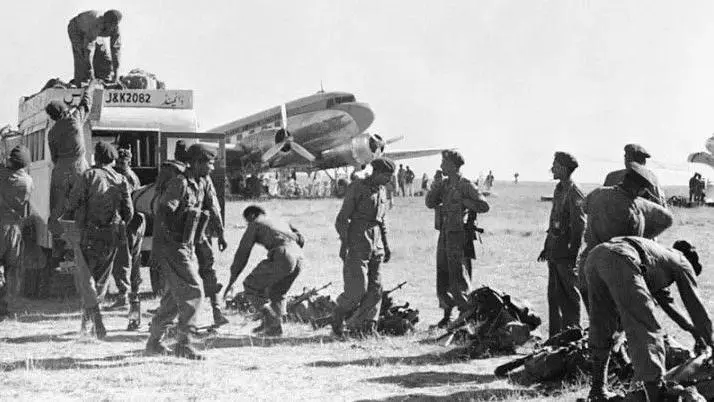
As the morning mist lifted from the Kashmir Valley on October 27, 1947, a Dakota aircraft from Delhi’s Willingdon Airfield touched down at Budgam airstrip near Srinagar. Aboard were officers and soldiers from the 1st Battalion of the Sikh Regiment — the first Indian troops to set foot in Kashmir. Their arrival marked the beginning of India’s military involvement in the princely state of Jammu and Kashmir.
Historian Alastair Lamb, in his book “Birth of a Tragedy: Kashmir 1947,” describes this moment as the beginning of the conflict that continues to shape India-Pakistan relations even today.
Hari Singh’s Dilemma and Pakistan’s Strategy
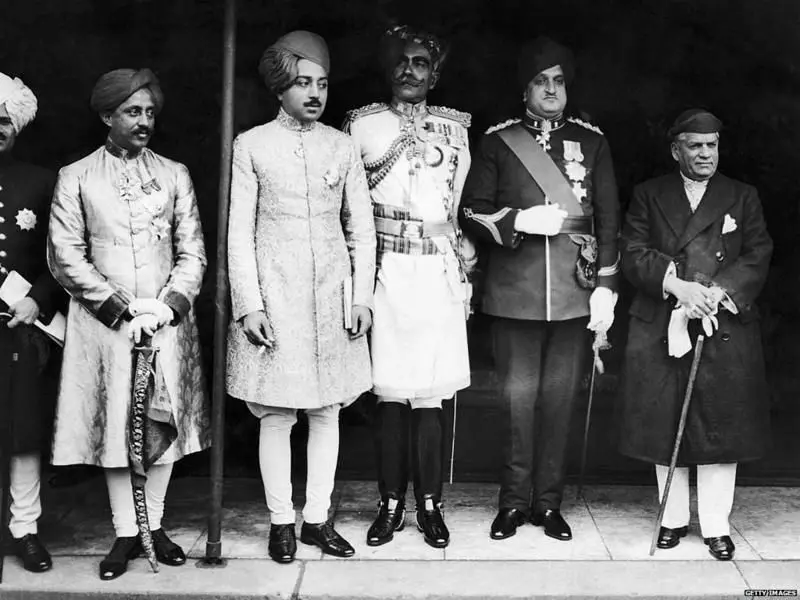
By mid-October 1947 — two months after independence — Maharaja Hari Singh of Jammu and Kashmir had still not decided whether his state would join India or Pakistan. Kashmir was a Muslim-majority region ruled by a Hindu monarch. Geographically and demographically, many believed it would accede to Pakistan. But the Maharaja hesitated, wanting to maintain independence.
Sensing an opportunity, Pakistan’s leadership covertly planned an invasion. The idea was simple: send tribal fighters and irregulars into Kashmir to seize control before India could react — a plan that would force Hari Singh’s hand and unite Kashmir with Pakistan.
The Tribal Invasion from Abbottabad
According to V. P. Menon in his book “The Story of the Integration of Indian States,” around 5,000 armed tribesmen, traveling in 200–300 trucks, moved out of Abbottabad in Pakistan’s North-West Frontier Province (now Khyber Pakhtunkhwa). These included Afridis, Wazirs, Mahsuds, and Swatis — fierce Pashtun fighters joined by “off-duty” Pakistani soldiers familiar with the terrain.
Historian Andrew Whitehead, in “Mission in Kashmir,” recounts that while Pakistan’s direct military role was not officially acknowledged, local support and logistical coordination were undeniable.
Religious leaders like the Pir of Wana publicly declared jihad. “If Kashmir joins India, I will lead ten lakh (one million) tribesmen to wage holy war,” he reportedly told The New York Herald Tribune. Others like Pir of Manki Sharif also rallied thousands of supporters in favor of jihad, giving the campaign a religious fervor.
Warnings Ignored
Sir George Cunningham, then Governor of the Frontier Province, warned tribal leaders that their actions could trigger a full-scale war between India and Pakistan. His diary entries, now preserved in the British Library, reveal his alarm. Yet his warnings were ignored. Frontier Province Chief Minister Khan Abdul Qayyum Khan openly supported the tribal incursion, even though he instructed police officers not to participate directly.
The Invasion Begins
On October 21, 1947, Khurshid Anwar — a member of the Muslim National Guard — led the main assault. He later told the Dawn newspaper that he commanded around 4,000 men and faced little resistance initially. Within days, the invaders captured Muzaffarabad and advanced toward Baramulla, just 35 miles from Srinagar.
However, as the tribesmen progressed, chaos followed. Looting, arson, and assaults on civilians began, including attacks on women and missionaries in Baramulla. The delay caused by this lawlessness allowed Indian forces just enough time to respond.
The Maharaja Appeals to India
Facing imminent collapse, Maharaja Hari Singh fled from Srinagar to Jammu. His forces, largely composed of Dogra troops, were exhausted and demoralized. Desperate, the Maharaja requested military assistance from India. But Governor-General Lord Mountbatten made it clear: India could only send troops after Kashmir legally acceded to India.
Hari Singh signed the Instrument of Accession on October 26, 1947. The next morning, Indian troops landed in Srinagar — a mission that would alter the destiny of Kashmir.
India’s First Airlifted Battle
At 9:30 a.m. on October 27, the first Indian plane landed at Srinagar airfield. Brigadier L. P. Sen and his men were immediately deployed to defend the airstrip. The entire day, Dakota aircraft shuttled between Delhi and Srinagar, ferrying men and equipment. Despite being outnumbered, Indian troops fought fiercely and halted the tribal advance near the outskirts of Srinagar.
The capture of Baramulla by invaders was brutal but short-lived. As Indian reinforcements poured in, the tide turned.
The Path to Srinagar — and the Turning Point
According to Brigadier Akbar Khan of the Pakistan Army, who later admitted involvement in his book “Raiders in Kashmir,” the tribal force advanced rapidly — covering 115 miles in just five days — and came within four miles of Srinagar. But poor discipline and greed for loot crippled their progress.
Whitehead writes that by October 27, even as thousands of Indian troops were being airlifted daily, the raiders had nearly surrounded the Srinagar airfield. Had they captured it, India’s only link to Kashmir would have been severed. But their hesitation — and India’s swift air response — changed everything.
How Pathankot Saved Kashmir
An important yet often overlooked factor in India’s success was geography. During Partition, the British lawyer Sir Cyril Radcliffe awarded the Pathankot tehsil of Gurdaspur district to India. This narrow corridor provided India with a land route to Jammu and Kashmir.
Historians Dominic Lapierre and Larry Collins, in “Freedom at Midnight,” note that without Pathankot, India would have had no access route to airlift troops or supplies to Kashmir. Some claim Lord Mountbatten influenced Radcliffe’s decision to favor India, a charge that remains debated to this day.
Pakistan’s Political Confusion
Pakistan, meanwhile, failed to convert the tribal raid into a coordinated military campaign. Brigadier Akbar Khan’s plan — initially a secret operation — lacked official sanction and suffered from poor communication. While local leaders like Sardar Mohammad Ibrahim Khan proclaimed a provisional government of “Azad Jammu and Kashmir” from Murree, the movement lacked organization.
Khan Abdul Qayyum Khan later admitted that “the tribesmen were beyond anyone’s control.” Each group had its own commander; they fought, looted, and quarrelled among themselves — even exchanging fire with their Pakistani supporters at times.
India Consolidates Control
With the airfield secure, Indian forces pushed back the invaders. By November, Baramulla was retaken. Over the next few months, fierce fighting continued across Uri, Poonch, and other regions. Pakistani forces and local militias resisted, leading to the first India-Pakistan war.
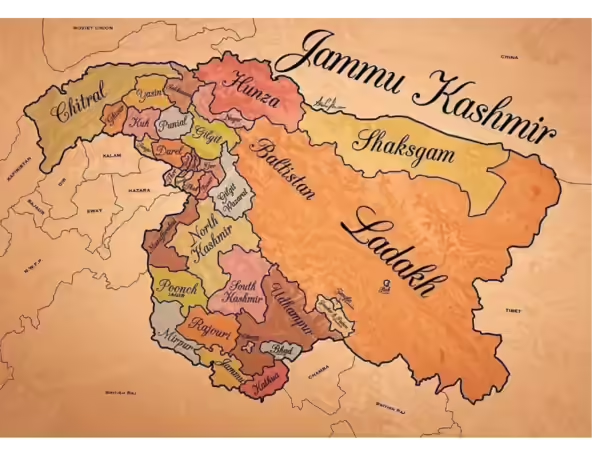
As Indian troops gained ground, Pakistan demanded international intervention. Both sides agreed to a ceasefire in January 1949, supervised by the United Nations. The ceasefire line — now called the Line of Control (LoC) — divided Kashmir into two parts.
The Question of Plebiscite
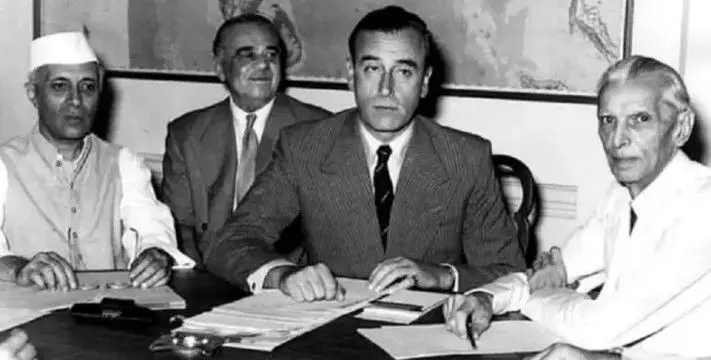
Lord Mountbatten and Prime Minister Nehru both initially agreed that once peace was restored, the people of Kashmir should decide their own future through a plebiscite. But as the situation evolved, India reconsidered. Realizing that a Muslim-majority population was unlikely to vote for India, Nehru’s government abandoned the idea.
Pakistan, however, continued to argue that India’s control over Kashmir was illegitimate — claiming that Indian troops entered before Hari Singh formally signed the accession, and that the Maharaja’s consent was obtained under pressure.
Why Pakistan’s Plan Failed
Christopher Snedden, in his book “Understanding Kashmir and Kashmiris,” explains that the tribal invasion failed because of poor discipline, lack of coordination, and Pakistan’s hesitation to use regular troops early on. Even Pakistani commanders later admitted that the tribal fighters caused chaos, looted civilian areas, and alienated the local population — many of whom might otherwise have supported them.
Khurshid Anwar, the commander of the initial assault, later lamented from his hospital bed in Karachi that Pakistan’s “inaction and indecision” doomed the mission.
The Legacy of 1947
The events of October–November 1947 shaped the destiny of South Asia. What began as a tribal raid spiraled into the first war between India and Pakistan. The princely state of Jammu and Kashmir became a divided land — half under Indian control, half under Pakistan’s.
To this day, both nations claim Kashmir as their own. And though decades have passed, the echoes of that first Dakota landing at Srinagar and the tribal march from Abbottabad still reverberate across the valley.










Responses (0 )