


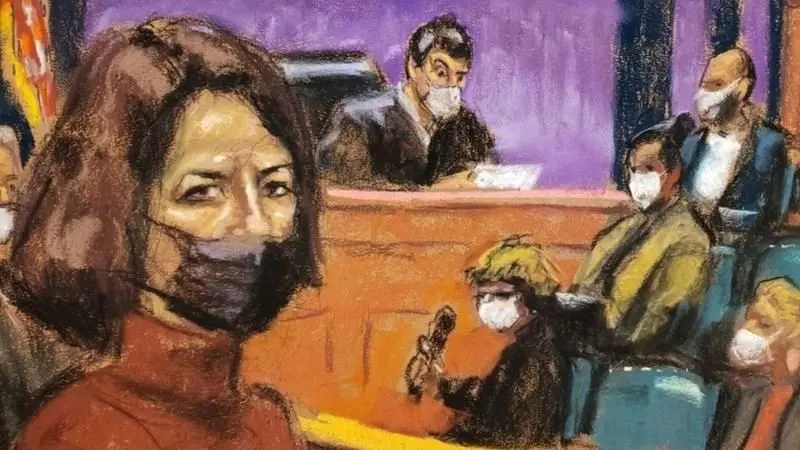
Ghislaine Maxwell was once a glamorous socialite moving effortlessly through the elite circles of London and New York high society. She attended exclusive parties, mingled with the world’s most powerful people, and lived a life surrounded by wealth and influence. Today, that world has vanished. She is serving a 20-year prison sentence for her role in one of the most disturbing sex trafficking scandals in modern history.
Her name is inseparably linked to Jeffrey Epstein, the wealthy American financier accused of running a vast network that sexually exploited underage girls. While Epstein died in prison in 2019 before facing trial, Maxwell became the most prominent figure held legally accountable for the crimes.
The Epstein Case That Shocked the World
Jeffrey Epstein was arrested multiple times on charges related to sexual abuse and trafficking of minor girls. Over the years, dozens of victims came forward, describing a pattern of exploitation that spanned decades and continents.
In August 2019, Epstein was found dead in his jail cell in what was officially ruled a suicide—though the circumstances sparked widespread skepticism and global controversy. His death left many unanswered questions, especially regarding the powerful individuals connected to him.
That is when attention turned fully to Ghislaine Maxwell, Epstein’s longtime associate and former girlfriend.
Ghislaine Maxwell’s Role in the Trafficking Network
According to court testimony, Ghislaine Maxwell was not a passive bystander. Prosecutors argued—and jurors agreed—that she played an active and central role in recruiting, grooming, and trafficking underage girls for Epstein.
Victims testified that:
They were as young as 14 years old when first approached.
Maxwell gained their trust, offered money, gifts, or help with school fees.
She normalized abuse, pretending that what was happening was “normal.”
She trained girls to give Epstein massages that escalated into sexual acts.
Several survivors said that Maxwell was often present in the room or nearby, reinforcing Epstein’s control and creating an environment where abuse could continue unchecked.
Conviction and Sentencing
In December 2021, a New York federal court found Ghislaine Maxwell guilty of sex trafficking of minors and conspiracy. In 2022, she was sentenced to 20 years in prison, a decision hailed by many as a rare moment of accountability in a case involving extreme wealth and power.
Prosecutors stated that Maxwell knowingly exploited vulnerable girls—many from broken homes, poverty, or previous abuse—fully aware of their age and circumstances.
A Troubled Past: Maxwell’s Early Life
Ghislaine Maxwell was born into immense privilege. Her father, Robert Maxwell, was a powerful British media tycoon and Member of Parliament. However, behind the public success was a deeply troubled household.
Robert Maxwell was known for being abusive and controlling.
Former family members described physical violence and emotional terror.
Ghislaine reportedly learned early to survive by pleasing powerful men.
In 1991, Robert Maxwell died mysteriously after falling from his luxury yacht. Later revelations exposed him as the architect of a massive pension fraud scandal, destroying the family’s reputation.
This collapse pushed Ghislaine to leave the UK and relocate to New York, where her life took a decisive turn.
Meeting Jeffrey Epstein
In New York, Ghislaine Maxwell met Jeffrey Epstein—a man whose background eerily mirrored her father’s rise from poverty to power. Their relationship soon became personal and professional.
Maxwell introduced Epstein to wealthy and influential individuals, helping him build elite connections. In return, Epstein funded her lavish lifestyle. According to witnesses and former employees, Maxwell managed Epstein’s households, organized parties, controlled staff, and oversaw logistics—making her a key enabler of his operations.
Testimonies That Exposed the Truth
Former victims and employees described a carefully controlled environment:
House staff were instructed to “see nothing, hear nothing.”
Surveillance and strict rules enforced silence.
Sexual paraphernalia was openly present in private rooms.
One employee testified that Epstein received multiple sexual massages per day, and Maxwell oversaw the process with full awareness.
Journalists and investigators later concluded that Maxwell acted as the recruiter, gatekeeper, and enforcer within Epstein’s system.
Life After Power: Maxwell in Prison
Today, Ghislaine Maxwell lives in a stark contrast to her former life. According to her family, she is held under constant surveillance, confined to a small cell, and closely monitored 24 hours a day.
Once a woman born “with a silver spoon,” she now exists in near-total isolation—her rise and fall playing out before the public eye.
Why the Case Still Matters
The Epstein–Maxwell case remains relevant because:
It exposed how wealth and influence can shield criminal behavior.
Many questions about Epstein’s associates remain unanswered.
Survivors continue to seek justice and recognition.
Ghislaine Maxwell’s conviction marked a rare moment when power did not fully escape accountability—but for many, it also highlighted how much truth is still hidden.
Conclusion
Ghislaine Maxwell’s story is one of privilege, power, trauma, and devastating choices. While her background may explain parts of her psychology, it does not excuse her actions. Courts concluded that she knowingly participated in the exploitation of children—and for that, she now faces the consequences.
Her life stands as a grim reminder that status and sophistication can conceal profound cruelty, and that justice, while delayed, can still arrive.













Responses (0 )