


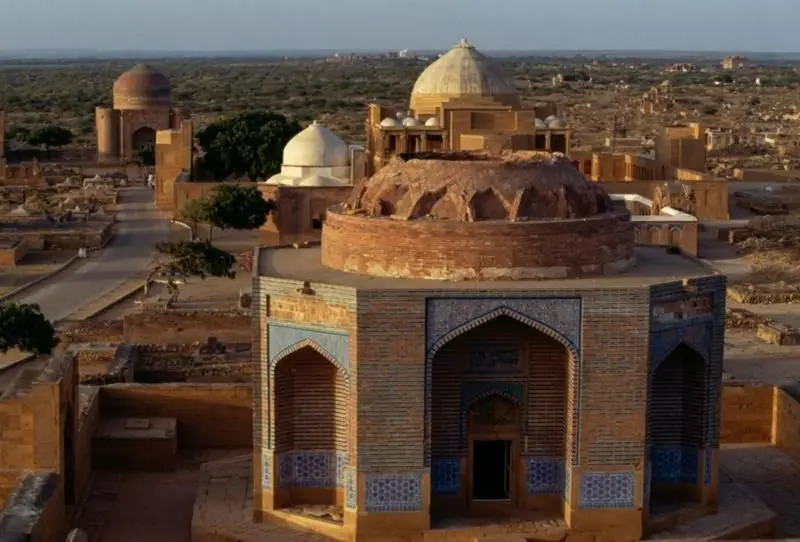
The province of Sindh holds a unique and emotionally charged position in the history of the Indian subcontinent. Known as the cradle of the Indus Valley Civilization, home to ancient cities like Mohenjo-Daro, and the birthplace of the great river Sindhu (Indus), it is a region deeply connected to the cultural memory of India. Yet today, Sindh lies within the boundaries of Pakistan.
In November 2025, this historical debate resurfaced after a statement made by India’s Defence Minister Rajnath Singh, which triggered a sharp response from Pakistan. Singh said that although Sindh is not part of India at present, culturally it has always belonged to India—and added that “borders can change” and perhaps one day Sindh may again be part of India. Pakistan called this statement provocative and accused India of promoting expansionist ideas.
This political exchange re-opened a long-standing question:
How did Sindh, once a core region of cultural India, become part of Pakistan at the time of Partition?
To understand this, one must explore the geography, history, demography, politics, and the complex negotiations that went into the Partition of British India in 1947.
This article examines these aspects in detail, tracing the journey of Sindh from ancient times to its inclusion in Pakistan, and its cultural connection with India that continues till today.
1. Sindh in the Ancient and Medieval World
1.1 The Indus Valley Civilization: The Roots of Sindh
Sindh is the heartland of the Indus Valley Civilization, one of the world’s earliest and most advanced urban cultures (3300–1300 BCE). Mohenjo-Daro—located in today’s Sindh—is one of its most iconic archaeological sites.
The Indus Valley Civilization shaped:
Urban planning
Trade and commerce
Metallurgy
Art and craft
Agricultural systems
The civilization was centered around the Sindhu (Indus) River, from which the region derives its name: Sindh (from Sindhu).
Because of this, the Indus River and its associated culture became deeply woven into Indian philosophical, spiritual, and historical memory.
1.2 Vedic and Classical References
The Rigveda—India’s oldest known text—uses “Sindhu” as a word for both river and region.
The ancient Indian civilization referred to lands watered by the Sindhu as sacred and culturally integral.
Over time, “Sindhu” became Hindu in Persian adaptation, and then “Indus” and “India” in Greek and Western adaptations. This linguistic shift shows that:
India as a name comes from Sindhu
Hindu originally meant “people of the Sindhu region”
This demonstrates the deep cultural connection between Sindh and Indian identity.
1.3 Sindh Under the Mauryas, Indo-Greeks, and Gupta Influence
Though political control varied, Sindh was culturally integrated with the northern and western regions of ancient India.
It was:
Part of the Mauryan Empire under Ashoka
A center of Buddhist learning
A crossroad of trade between India, Persia, and Central Asia
1.4 Arab Conquest and the Spread of Islam
In 711 CE, the Umayyad general Muhammad bin Qasim conquered Sindh, making it one of the earliest regions in the subcontinent to come under Muslim rule. This introduced new layers of culture, language, and religion.
However, despite the changes, Sindh retained:
Its Indic customs
Blended Hindu-Muslim culture
Strong trade links with Gujarat, Rajasthan, and broader India
Thus, for more than a thousand years, Sindh continued to be part of the Indian civilizational sphere.
2. Sindh Under British Rule
2.1 Annexation by the British (1843)
Sindh was conquered by the British under Sir Charles Napier in 1843 and merged with the Bombay Presidency. This administrative decision tied Sindh more closely to western India.
2.2 Demography in the 19th and Early 20th Century
Before Partition, Sindh had a very mixed population:
Muslims: Around 70%
Hindus (including Amil, Bhaiband, Bania, and Lohana communities): Around 25–30%
Sikhs and others: Small percentage
Despite being a numerical minority, Sindhi Hindus dominated:
Trade
Education
Commerce
Urban administration
Muslims were largely agricultural and rural, though many were also landlords.
2.3 Why Sindh Was Separated from the Bombay Presidency (1936)
Sindh demanded separation for reasons:
Linguistic identity
Religious composition
Administrative neglect under Bombay
Thus, in 1936, Sindh became a separate province—a crucial turning point for Partition politics.
3. The Road to Partition and Sindh’s Position
3.1 The Rise of the Muslim League in Sindh
Initially, Sindh had a mixed political landscape. Many Sindhi leaders supported united India ideas, and there were strong cultural ties with Hindus.
However, the Muslim League gained support in the 1930s and 1940s, especially among rural Muslim landlords and elites.
3.2 Sindh Assembly Votes for Pakistan
In June 1947, the Sindh Legislative Assembly voted to join Pakistan. This was influenced by:
Muslim League pressure
Fear of Hindu economic dominance
The idea of Muslim-majority nationhood
Political assurances from Jinnah (himself a Sindhi Muslim by heritage)
Many Hindu members opposed it, but the final vote passed.
This sealed Sindh’s fate in Pakistan.
4. The Partition of 1947 and Its Impact on Sindh
4.1 Mass Migration of Sindhi Hindus
Unlike Punjab, Sindh did not see widespread communal violence initially. But after August 1947:
Hindu homes and businesses were targeted
Pressure increased
A massive migration began
Lakhs of Sindhi Hindus migrated to:
Gujarat
Maharashtra
Rajasthan
Madhya Pradesh
They established communities in cities like Mumbai, Ahmedabad, Ulhasnagar, Jaipur, Indore, and Pune.
4.2 Cultural Loss and Memory
For Sindhi Hindus, migration was not just physical displacement. It was:
A loss of their homeland
A rupture in identity
A permanent separation from ancestral lands
This emotional connection persists strongly in India today.
5. Post-Partition Sindh in Pakistan
5.1 Demographic Shift
After Hindus migrated, Sindh’s population changed drastically:
Muslim population became over 90%
Muhajirs (Urdu-speaking migrants from India) settled in Karachi and Hyderabad
Sindhi and Muhajir tensions emerged later
5.2 Karachi Becomes a Migrant City
Karachi became Pakistan’s capital and economic hub, with a massive influx of migrants. This reshaped Sindh’s political and cultural landscape.
5.3 Cultural and Linguistic Tensions
Sindhi language and culture faced challenges as Urdu-speaking migrants became dominant in cities. This led to decades of political friction.
6. Why Sindh Still Has Cultural Ties With India
6.1 Shared River, Shared Civilization
The Indus River is central to Indian civilizational memory:
The name “India” comes from Indus
The national anthem includes “Sindh”
Ancient scriptures refer to Sindhu as sacred
6.2 Sindhi Hindu Diaspora in India
Sindhi Hindus in India have preserved:
Language
Festivals
Sufi traditions
Temples linked to Jhulelal and other deities
Their emotional connection to Sindh remains strong.
6.3 Sufism and Shared Spiritual Traditions
Shrines like:
Lal Shahbaz Qalandar (Sehwan)
Shah Abdul Latif Bhittai
have deep spiritual links with Indian traditions.
7. Why Rajnath Singh’s Statement Created Controversy in 2025
In November 2025, Rajnath Singh said:
“Though Sindh is not part of India today, culturally it will always remain part of India. Borders can change. Who knows—perhaps someday Sindh may become part of India again.”
Pakistan reacted strongly, calling it:
Provocative
Expansionist
Historically distorting
But the Indian statement referenced:
Cultural history
Ancient civilizational ties
Mass migration from Sindh after Partition
The personal history of L. K. Advani, who was born in Sindh
The underlying point was cultural—not political—but Pakistan interpreted it geopolitically.
8. Geographical Context
According to modern geographical descriptions:
To the east, Sindh borders Gujarat and Rajasthan
To the north-east, it borders Punjab (Pakistan)
To the north-west, it touches Balochistan
To the south, it meets the Arabian Sea
Its central river, the Indus, forms a fertile delta that has sustained civilizations for thousands of years.
9. Why Sindh Went to Pakistan: Summary of Key Factors
Sindh joined Pakistan due to a mixture of:
1. Administrative Independence (1936)
Becoming a separate province made Sindh a political unit capable of its own decision.
2. Muslim Majority
Though Hindus dominated trade, Muslims were the demographic majority.
3. Muslim League Influence
The League persuaded Sindhi leaders to envision Pakistan as beneficial.
4. Fear of Hindu Economic Dominance
Muslim landlords feared losses under a Hindu-majority India.
5. Emotional and Religious Appeal
The idea of a Muslim homeland influenced political decisions.
6. Strategic Interests
Pakistan needed access to the sea; Sindh provided that through Karachi.
10. The Cultural Debate Today
India’s Perspective
India sees Sindh through:
Civilizational memory
River-based identity
Historical inclusiveness
Pakistan’s Perspective
Pakistan views Sindh as:
A core province
An essential part of its identity
A region central to its economy and history
Thus, political statements about Sindh naturally trigger reactions from Pakistan.
Conclusion
Sindh is far more than a geographical region. It is:
The birthplace of the Indus Valley Civilization
A symbol of India’s ancient identity
A historical homeland for Sindhi Hindus
A culturally rich province of Pakistan
A region shaped by centuries of migration, conquest, trade, and transformation
Its inclusion in Pakistan during Partition was not accidental—it arose from demographic, political, and strategic decisions made in the final years of British rule.
Yet, despite the political separation, cultural links between India and Sindh remain deep and enduring. The river Sindhu flows not just through Pakistan’s geography but through the memory and identity of the entire subcontinent.
Thus, whenever any political leader mentions Sindh, it naturally evokes strong emotions, historical debates, and diplomatic reactions—because Sindh is more than territory; it is history, culture, and identity intertwined across borders.








Responses (0 )