


M.S. Swaminathan: The Father of the Green Revolution Who Saved India from Hunger
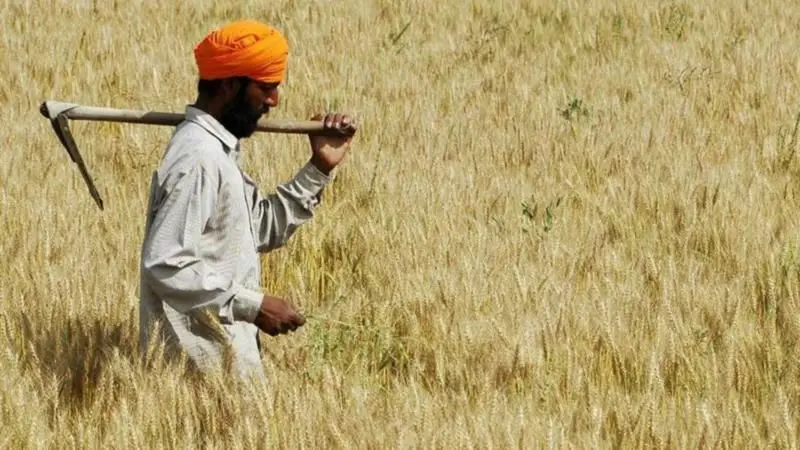
In 1965, on a quiet Sunday morning in Jounti — a small village near Delhi — a humble farmer reached out to a scientist and said,
“Doctor sahib, we will use your seeds.”
That scientist was Dr. M.S. Swaminathan, the man who would later be known as “The Father of the Green Revolution” in India. TIME Magazine hailed him as “The Godfather of the Green Revolution,” and alongside Rabindranath Tagore, he was recognized as one of the most influential Indians of the 20th century.
When Swaminathan asked the farmer why he trusted the new variety of wheat, the farmer replied,
“A man who walks from one field to another on a Sunday is not doing it for profit — but for principle.”
That moment of trust would change the destiny of a nation.
🌾 India on the Brink of Famine
By the mid-1960s, India was on the verge of a severe food crisis. The country depended heavily on irregular wheat imports from the United States under the PL-480 scheme. Ships carrying food grains were awaited like lifelines.
At the time, the average Indian survived on just 417 grams of food per day. The situation was so dire that then-Prime Minister Jawaharlal Nehru urged citizens to replace wheat with sweet potatoes.
But change was coming.
The introduction of high-yielding wheat varieties transformed barren fields into lush green farms. Within just a few years, wheat production doubled, and India — once plagued by drought and famine — became self-sufficient in food grains.
🌱 The Seeds of a Revolution
Born in 1925 in Kumbakonam, Tamil Nadu, M.S. Swaminathan grew up in a family of prosperous farmers who valued education and service. Initially expected to become a doctor, his life took a dramatic turn after witnessing the Bengal Famine of 1943, in which over three million people perished.
That tragedy deeply affected him.
He later recalled,
“I decided to become a scientist who would develop better crop varieties so that we could grow more food. Medicine can save a few lives, but agriculture can save millions.”
He pursued his Ph.D. in Plant Genetics at Cambridge University, followed by research in the Netherlands and at the International Rice Research Institute (IRRI) in the Philippines.
In Mexico, Swaminathan met Dr. Norman Borlaug, the American agronomist and Nobel Laureate whose dwarf, high-yielding wheat varieties would become the foundation of the Green Revolution.
By 1963, Swaminathan had persuaded Borlaug to send improved wheat seeds to India. Three years later, India imported 18,000 tons of these seeds for experimental use. Swaminathan adapted them to the Indian climate, developing new varieties — Kalyan Sona and Sonalika — which produced two to three times more yield and were resistant to pests and diseases.
🌾 Winning the Trust of Farmers
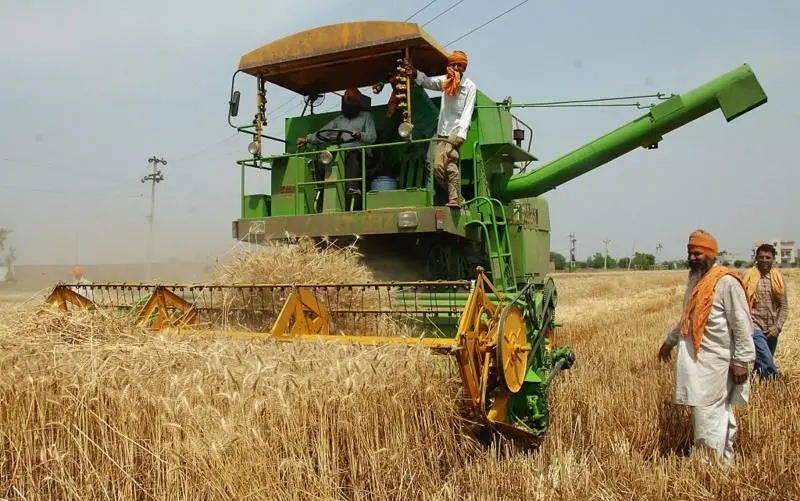
Convincing Indian farmers to abandon traditional seeds was not easy. Bureaucrats were skeptical of foreign varieties, and transportation delays added to the challenge.
But Swaminathan was determined. He personally visited villages with his family, meeting farmers and distributing seeds himself.
In Punjab, he even organized prisoners to pack wheat seed bags to ensure timely distribution before the sowing season.
Understanding Indian preferences, he replaced Mexico’s small, red wheat with golden, soft-textured varieties more suitable for chapatis and naan — a thoughtful decision that strengthened farmers’ trust.
🌾 From Famine to Food Security in Four Years
Within four years, India’s agricultural landscape changed dramatically.
Punjab and Haryana became known as the nation’s “breadbasket.” By 1971, India had not only overcome famine but achieved surplus grain production.
For millions of Indians, science became the savior, and Swaminathan, its guiding light.
He often reminded scientists,
“Do you know that the farm itself is a laboratory — and the farmer is the real scientist?”
His philosophy was simple yet powerful: “Listen to the farmer before finding solutions.”
On weekends, he would visit villages to study soil moisture, pest patterns, and seed costs. He worked with tribal women in Odisha to develop new rice strains and promoted salt-resistant crops in drought-prone Tamil Nadu.
In Punjab, he reminded wealthy landowners that science alone couldn’t eradicate hunger — it must be accompanied by compassion.
🌾 A Global Visionary
Dr. Swaminathan’s impact extended beyond India.
In the 1980s, he became the first Indian Director General of the International Rice Research Institute (IRRI). He helped Southeast Asian nations like Indonesia, Vietnam, and the Philippines boost rice productivity.
From Malaysia to Iran, Egypt to Tanzania, governments sought his expertise.
He helped Cambodia rebuild its rice gene bank, trained women farmers in North Korea, and guided African scientists battling famine in Ethiopia.
In 1987, Swaminathan became the first recipient of the World Food Prize, often regarded as the “Nobel Prize of Agriculture.” The UN Secretary-General honored him as a “Living Legend” for his lifelong fight against hunger.
Through the M.S. Swaminathan Research Foundation (MSSRF) in Chennai, he advanced projects on biodiversity, coastal restoration, women’s empowerment, and sustainable rural development.
🌱 Challenges and the Concept of the “Evergreen Revolution”
While the Green Revolution saved India from famine, it also created new ecological problems — groundwater depletion, soil degradation, and chemical pollution.
Monocropping of wheat and rice in states like Punjab and Haryana reduced biodiversity and worsened climate risks.
Swaminathan foresaw these dangers. In the 1990s, he introduced the concept of the “Evergreen Revolution” — a model of increasing productivity without harming the environment.
He warned,
“Future progress depends not on fertilizers, but on protecting water, soil, and seeds.”
His blend of science and compassion made him a rare public figure who linked data with human empathy.
🌾 Legacy and Recognition
In 1971, Swaminathan received the Ramon Magsaysay Award, donating much of his prize money to rural scholarships.
He championed gender equality and digital literacy in farming communities — long before “AgriTech” became a buzzword.
From 2004 to 2006, he chaired India’s National Commission on Farmers, producing five landmark reports that examined the root causes of agrarian distress and recommended a National Policy for Farmers.
Even at the age of 98, he supported farmers protesting against controversial agricultural reforms, proving that his empathy remained as strong as his intellect.
Odisha’s Chief Minister Naveen Patnaik once said:
“His legacy reminds us that freedom from hunger is the greatest freedom of all.”
Dr. M.S. Swaminathan passed away in 2023 at the age of 98. Yet, his life’s work continues to nourish millions and guide the world toward sustainable, farmer-centric agriculture.









Responses (0 )