


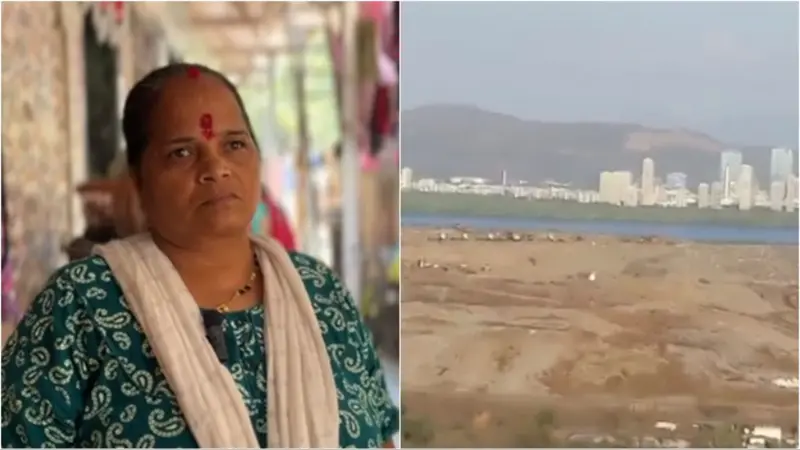
Mumbai, India’s financial capital, produces thousands of tonnes of garbage every single day. While the city grows vertically with skyscrapers and infrastructure, its waste management system continues to rely heavily on massive dumping grounds. One of the most controversial among them is the Kanjurmarg dumping ground, which residents say is slowly destroying their health, livelihoods, and quality of life.
For people living in Kanjurmarg, Vikhroli, Bhandup, Powai, Mulund, and nearby areas, garbage is not just an environmental issue—it is a daily health emergency.
“Garbage Has Reduced Us to Begging”
Sixty-four-year-old Kashinath Patil, a resident of Ekvira Nagar in Kanjurmarg, points towards the dumping ground as he speaks with pain and frustration.
“Because of this garbage dumping, we have lost everything. Our health is ruined, our work is gone, and even fishing has been affected due to chemicals. No one has paid attention to our suffering for years.”
His voice reflects the collective anger of thousands of residents who say that toxic waste, unbearable stench, and pollution have made normal life impossible.
How the Kanjurmarg Dumping Ground Affects Daily Life
According to local residents, the impact of the dumping ground goes far beyond bad smell.
Major problems faced by residents:
Persistent foul odour, especially in mornings and evenings
Smoke from garbage fires, causing breathing difficulties
Chemical-contaminated water entering nearby creeks
Increase in skin infections, vomiting, nausea, and respiratory diseases
Rising mosquito-borne illnesses
Loss of traditional fishing livelihoods
Women, children, elderly people, and those with pre-existing illnesses are the worst affected.
“We Are Sick All the Time”
Fifty-year-old Kaveri Patil, who has lived in the Kanjur village area for decades, says life has become unbearable in recent years.
“My son suffers from constant vomiting because of the smell. He is on regular medication. We don’t want to live here anymore, but we have no choice.”
Another resident, Suman Mhaskar, adds:
“We fall sick again and again. The smell causes nausea, vomiting, and skin diseases. Every two days, we are visiting doctors.”
Even residents living in high-rise buildings in Vikhroli complain that they are forced to keep doors and windows shut throughout the day.
Doctors Warn: A Public Health Emergency
Local doctors confirm a sharp rise in health complaints linked to the dumping ground.
Dr. Rajesh Vaidya, a family physician from the Vikhroli-Kanjur-Powai area, explains:
“Cases of nausea, vomiting, skin infections, and respiratory diseases have increased significantly. Patients with heart disease, diabetes, and blood pressure conditions are suffering more.”
He also points out the presence of sulphur oxide gases, smoke from frequent garbage fires, and toxic emissions during evenings—all of which worsen air quality.
A doctors’ association from the area has formally written to municipal authorities and the state government, warning that public health is at serious risk.
Fishermen Lose Their Livelihoods
For traditional fishing communities, the impact is economic as well as environmental.
Kashinath Patil explains:
“We used to fish near Kanjur, Bhandup, and Navi Mumbai creeks. Now the chemicals have killed the fish. There is no work left for us. How are we supposed to survive?”
Chemical-laden waste flowing into creeks has destroyed marine life, forcing many fishermen to abandon their ancestral profession.
Why Kanjurmarg Dumping Ground Is So Controversial
The Kanjurmarg dumping ground covers over 118 hectares and currently receives around 5,900 tonnes of waste daily—nearly 85% of Mumbai’s total garbage, which is about 7,000 tonnes per day.
What makes the situation worse is that:
The land falls under protected forest category
It is close to mangroves, Thane creek, and flamingo habitats
The area was originally salt pans and wetlands
Environmentalists warn that long-term damage could be irreversible.
Legal Battle: Courts, Committees, and Delays
Environmental groups and citizen forums have been fighting this dumping ground for over 13 years.
Key legal developments:
In May 2025, the Bombay High Court ruled that the land is protected forest land and ordered restoration
The Brihanmumbai Municipal Corporation (BMC) and Maharashtra government challenged the order
On 1 August 2025, the Supreme Court granted a temporary stay, allowing dumping to continue
Other petitions focusing on public health are still being heard
In December 2025, the Bombay High Court observed that clean air is a fundamental right and called the situation “an emergency.”
No Alternative for Mumbai’s Waste?
The civic body argues that Mumbai has no alternative dumping site:
Gorai dumping ground is closed
Mulund dumping ground is being shut
Deonar land is reserved for redevelopment
This leaves Kanjurmarg as the city’s primary waste disposal site—for now.
So far, over ₹4,000 crore has already been spent on operating this dumping ground, with contracts running until 2036.
Residents Say the Fight Will Continue
Local activist Sanjay Yeole, president of the Vikhroli Residents Development Forum, says:
“This dumping ground is illegal. It violates court orders and harms people living nearby. Until it is removed, our protest will continue.”
Despite repeated complaints, residents say authorities have failed to provide long-term solutions.
A Question of Health, Environment, and Human Dignity
The Kanjurmarg dumping ground is no longer just a waste management issue. It is a question of:
Public health
Environmental justice
Right to clean air and water
Human dignity
As courts continue hearings and committees submit reports, thousands of Mumbai residents wait—breathing polluted air, falling sick, and wondering how long they must pay the price for the city’s garbage.









Responses (0 )