


The Night It Ended
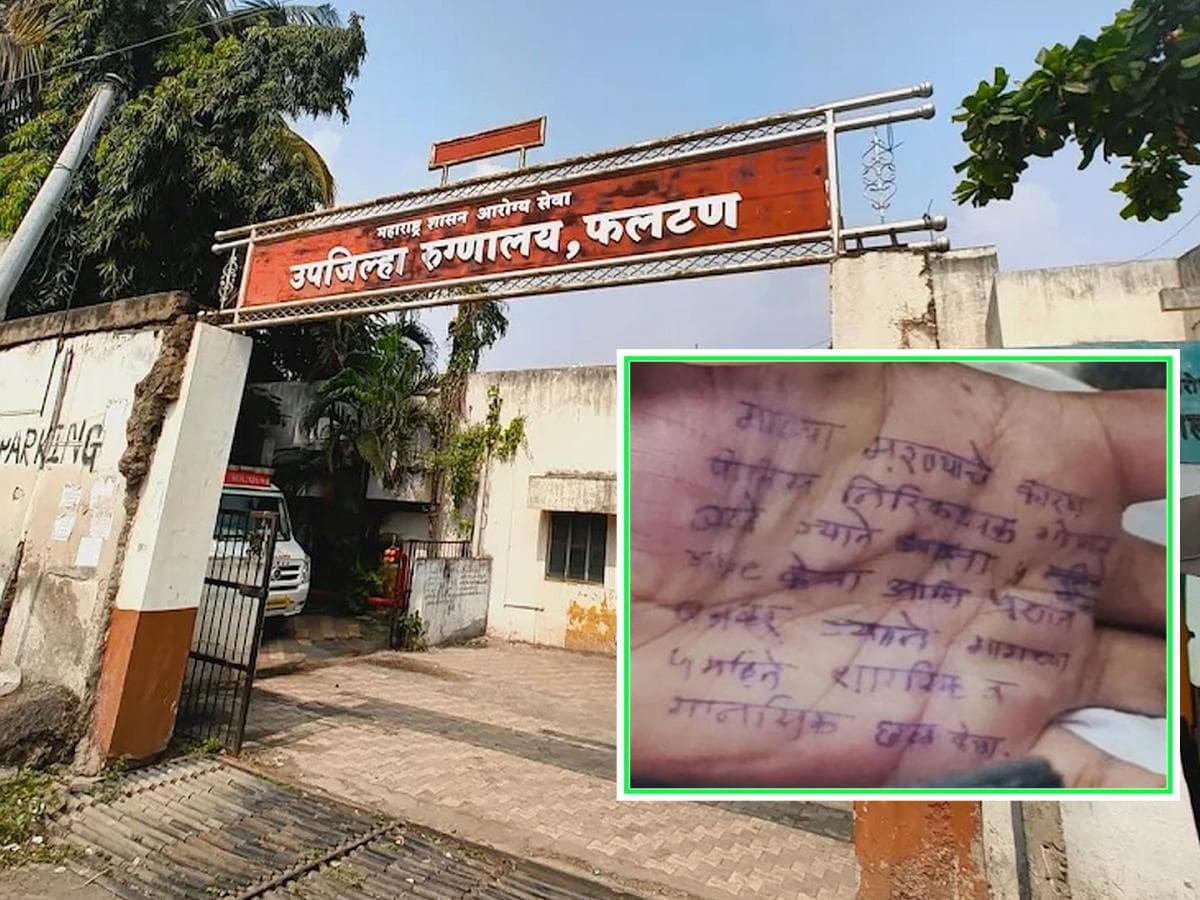
In the quiet corridors of the Phaltan Sub‑District Hospital in the Satara district of Maharashtra, something deeply disturbing unfolded one October night. The doctor, identified in reports as Dr. Sampada Munde, was found dead in what preliminary police records have termed an apparent suicide. (www.ndtv.com)
In her final message—scrawled on her own hand, according to media accounts—Dr. Munde wrote names of police officers she accused of misconduct, signalling a kind of desperation only visible in that moment. (Maharashtra Times)
Her death has since sent ripples of shock through the medical community, local society and beyond: a story not merely of individual tragedy, but of systemic failure.
The Allegations: A Note Written in Silence
According to local Marathi-language reports, Dr. Munde had endured repeated harassment and alleged abuses over an extended period—her note mentions “four times” instances of alleged wrongdoing and “nine months” of mental anguish. (Maharashtra Times)
While a full, independent, publicly-released investigation is still pending, the sequence of events as currently known is alarming:
The note reportedly contained names of two police sub-inspectors connected with the case. (Maharashtra Times)
Dr. Munde had allegedly expressed to her superiors the feeling that she was being treated unfairly and had threatened to take extreme action if the mistreatment did not stop. (www.ndtv.com)
A departmental inquiry against the doctor had reportedly been underway, linked to a conflict between her and local police over a medical examination. (www.ndtv.com)
The narrative emerging is of a professional caught between her duty, her distress and institutions that may have failed to respond.
Professional Life and Pressure Cooker Realities
To understand the backdrop, one must appreciate the unique pressure a doctor like Dr. Munde worked under:
Serving in a sub-district hospital with high patient loads and limited resources.
Holding a role in public service with duties that may extend far beyond the clinic.
Operating in a patriarchal environment where women professionals often bear burdens both on-site and unseen.
Balancing patient care, administrative demands and the emotional toll of life-and-death decisions.
Add to this the spectre of harassment—real, alleged or perceived—and the situation becomes a volatile mix of stress, isolation and frustration.
In many Indian hospitals, mental health support for doctors remains inadequate. The very people expected to care for others often become invisible patients themselves. In Dr. Munde’s case, by the time her hand carried a note naming alleged abusers, the internal alarm had already sounded. The question now is: did the system hear it?
The Institutional Response: Investigation Begins
Following Dr. Munde’s death, the local police in Satara district registered the matter and initiated a detailed probe. (www.ndtv.com) Several steps have been reported:
A forensic analysis of the handwritten note and scene of death.
Checking call records, CCTV footage, and hospital logs to trace interactions between the doctor and the named officers.
Administrative review of prior complaints filed by Dr. Munde with hospital authorities or higher-ups.
At the same time, the state administration has been alerted to the potential seriousness of the case—especially since it involves law-enforcement officials as accused persons. Each hour without transparent updates heightens public scepticism and erodes trust.
The Wider Lens: Harassment, Power and the Medical Profession
While every case of harassment is unique, Dr. Munde’s story fits into several broader fault-lines in the Indian workplace and public-service ecosystem:
Power Asymmetry: When individuals accused are from powerful institutions (e.g., police), the perceived cost of complaint rises for victims.
Whistle-blower Risk: Those who raise concerns may face retaliation, isolation or career stagnation—especially if protection mechanisms are weak.
Mental-health Neglect: Medical professionals—who deal with trauma daily—often lack adequate mental-health breaks, counselling or safe spaces to speak out.
Institutional Weaknesses: Complaint redressal, independent oversight and timely action remain inconsistent across public institutions.
In this case, a young doctor’s desperation culminated not only in her death, but in a message that needs to be read not just as a personal tragedy, but as a red flag for the institutions around her.
Voices from the Ground
Although details remain incomplete, statements from her colleagues and local medical personnel sketch the atmosphere:
“She was a competent doctor, dedicated to her patients. But she kept saying something wasn’t right—she was under pressure, she felt threatened.”
– A colleague (name withheld)
From local media:
“The hospital is in mourning. A serving doctor, under such distress, choosing to end her life—this cannot be simply chalked down as personal. It points to failures in systems we built to protect people like her.”
– Report in Marathi daily. (Maharashtra Times)
Medical associations in Maharashtra have begun demanding a transparent, independent inquiry and safeguards for healthcare workers experiencing harassment or institutional neglect.
What’s Next: Key Questions to Watch
As the investigation proceeds, several pivotal questions will determine accountability and future impact:
Authentication of the note: Are the names and allegations verifiable? Was the note written voluntarily and under no duress?
Role of law-enforcement officers named: Are they suspended, under investigation, or cooperating?
Hospital and administrative response: What prior complaints were made? How did the hospital respond? Was there any follow-up?
Support for the doctor: Was there any mental-health counselling or grievance mechanism available prior to the tragedy?
Protective frameworks: Will this case trigger policy changes for doctors and public-service professionals facing harassment?
The outcome of these will shape not only the fate of this particular case, but may influence how Maharashtra and India protect professionals in vulnerable institutional positions.
Broader Policy Implications
Beyond the immediate case, this incident prompts reflection on systemic reforms:
Strengthening Grievance Mechanisms: Public-service workplaces must have accessible, anonymous complaint channels with assured protection and independent oversight.
Mental-Health Infrastructure for Doctors: Hospitals should provide regular counselling, peer support groups, burnout checks and a culture where distress can be voiced without stigma.
Accountability When Accused Are Powerful: When complaints involve police or other authorities, independent investigation mechanisms must guarantee impartiality and transparency.
Safety Nets for Whistle-blowers: Professionals who speak out must be protected both legally and institutionally from retaliation.
Data Collection & Monitoring: A national registry of workplace harassment cases in healthcare could enable tracking, intervention and policy formation.
At the Heart of the Matter: A Human Story
We must remember that at the heart of all this is one human being—Dr. Munde—who appears to have felt unseen, unheard and trapped. For nine months, she reportedly faced mental anguish, for “four times” she claimed assault, and she opted for the ultimate escape. In her last act, she left a message—on her skin, in her words—telling the world something had gone irreparably wrong.
Her story is a stark reminder: ignoring small cries for help can lead to irreversible tragedy. In the corridors of hospitals, in the quiet of late shifts, professionals may be battling not just illness in others, but their own personal storms.
What the Public Can Do
Journalists and media must ensure coverage remains factual, respectful and sensitive to survivors and victims.
Medical institutions should audit their workplace culture and ensure every staff member can speak up safely.
Policy-makers should track progress on reforms and ensure justice is visibly delivered in cases like this.
Citizens and patients can support demands for transparency and hold public institutions accountable.
In Conclusion
The death of Dr. Sampada Munde in Phaltan is not simply a report of “doctor commits suicide.” It is a cautionary tale of how institutional neglect, possible harassment, mental-health deficit and power imbalance can combine to deadly effect. It asks of society: when someone whispers “I am being wronged,” do we listen — or do we wait until silence becomes tragedy?
Right now, Satara district, Maharashtra and indeed India are watching: how will justice be served? How will change be made real? And how many more lives will we silently lose before we transform systems that should protect our healers?
This is general information only and not a legal or medical advice. For personal guidance, please consult the appropriate licensed professionals.









Responses (0 )